- Home
- Red Pond
Red Pond
1 General Presentation
MARE ROUGE MARE ROUGE is the second communal section of the commune of Môle Saint Nicolas in the Northwest Department of Haiti. The commune has two other sections: Côte de Fer and Damé. Mare Rouge is the largest section in the commune, located between the first section, Côte de Fer, and the third section, Damé. Mare Rouge has an area of approximately 33.3 square kilometers. Mare Rouge is a rural area often considered an urban area of the commune, representing one of the largest spaces in the commune. According to available data, in 2015, the section already had more than 18,000 inhabitants in an area of 33.33 square kilometers, representing a population density of 525 people per square kilometer. According to MNFP/IDB data from 2025, this section represents 29.3% of the 7,441 households in the commune, an estimated 2,179. This makes Mare Rouge the largest demographic and social area in the commune of Môle Saint Nicolas. Demographically, Mare Rouge has nine officially recognized large settlements: Chapelle, Bellevue, Grand Mare Rouge, Santrain, Lavaltière, Janvier, Cadieu, Pecri, and Garçon.
2- SOCIAL STRUCTURE
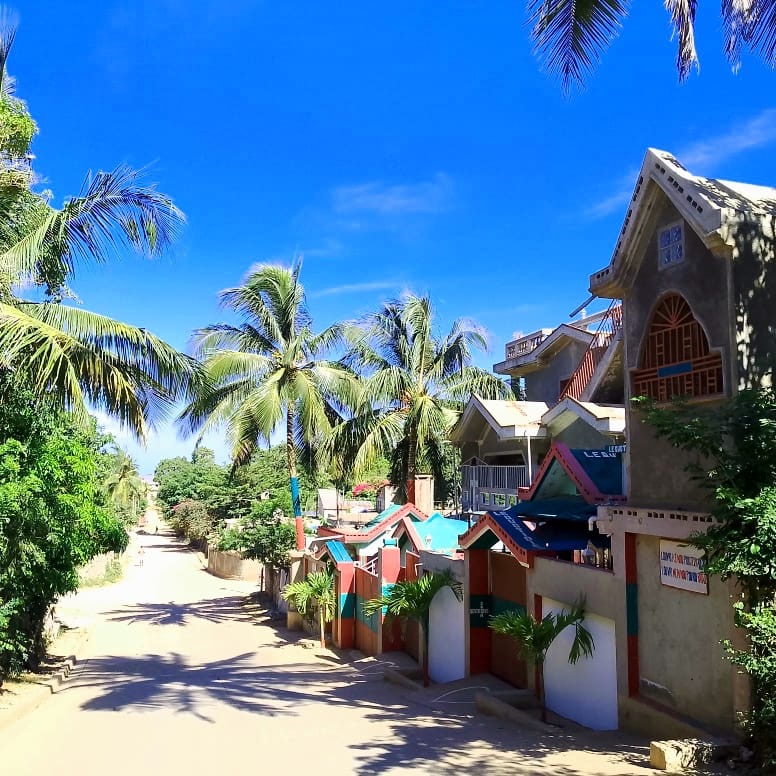
The population of Mare Rouge lives in a rural environment. Economic activities are mainly linked to livestock farming, agriculture, commerce, services, small and medium-sized enterprises, and activities centered around the local market. A large majority of the population depends directly or indirectly on agricultural production. Young people represent an important aspect for the area and its development. Like many other rural areas in the country, young people are a significant human resource, and many return after their university or vocational studies in the country’s major cities or elsewhere. The reality is that they are often forced to leave Mare Rouge to pursue their technical or university studies, while others leave in search of professional and economic opportunities.
3- Economic Activities
A. Agriculture
B- Livestock Farming
C- Commerce:
D- Businesses:
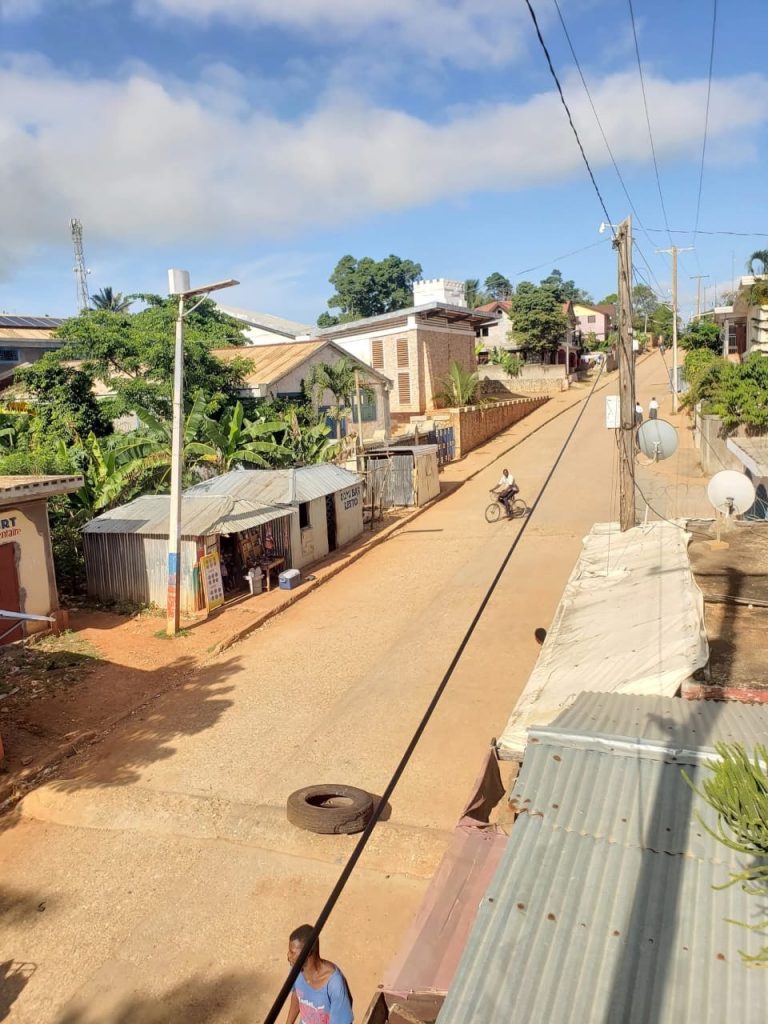
Here you will find: Shops, Small restaurants, Small workshops, Transportation, Craft activities, Telephone services, Currency exchange, etc. However, it should be noted that these sectors need more capital to grow and provide more services to the community.
E- Education:
Education in Mare Rouge is one of the few sectors where reliable data can be found. Mare Rouge has more than a dozen primary schools, such as the Mare Rouge National School, Saint John Bosco Presbyteral College, Vision Moderne, Bethesda College, La Fraternité College, etc. However, there is a problem with access and the required quality of education. The level of teacher training, the schools’ capacity to provide educational infrastructure, and the distances students have to travel to reach school make education difficult in some parts of the area. For higher education, there is a university center in the area, but it is currently under-enrolled. There is also talk of a CEST (Center for Higher Education Studies) that is planned, but for now, it remains just a concept. There are also vocational schools offering training in areas such as office computing, music, floral design, cooking, etc. In this regard, it is important for me to raise these questions: Does the area have a sufficient number of schools? Is the quality of education commensurate with the actual needs of the area?
E-Health
is one of the sectors requiring particular attention because it is one of the rarest services in the community. For even the slightest health complication, people have to leave the area, against all odds, to go either to other towns in the department or even to other departments in the country. The only health center in Mare Rouge provides basic services in the area, but this does not meet the population’s healthcare needs. The main problems to list are: the quantity and quality of healthcare professionals available in the area; medications; maternity services; childcare; vaccinations; emergency services; medical laboratory; the capacity to manage serious cases; etc. There are also pharmacies and a few private clinics, but the problem remains unresolved.There are also a few small pharmacies in the area where the most common medications can be found. The number of available healthcare professionals is not quantified; however, it should be noted that this problem claims many victims in the area, with patients losing their lives simply trying to reach the Jean Rabel or Port de Paix hospitals. Urgent intervention from the central government is needed to address this issue!
F- Drinking water, electricity, and energy.
For the Mare Rouge area, drinking water remains one of the biggest challenges: the quality of the water used, the quantity available to serve the population, etc. Some houses have basins or cisterns built to store rainwater, but this only partially solves the problem. How long will this continue? How far must families travel to reach water sources? What will happen during the dry seasons, given that the area is primarily agricultural? There is no electricity in Mare Rouge, just as in most rural areas of Haiti. Access to electricity remains a dream. Will it ever become a reality? Regarding energy, it is observed that the residents of the area use solar power for lighting in certain parts of the area, as well as for their homes. If only solar power plants could be established, this would bring significant potential to Mare Rouge.
G- Roads and Transportation:
Access to properly constructed roads remains a key factor in the development of an area, and Mare Rouge is no exception among those areas that lack access to normal roads. When roads are in poor condition, it is difficult to transport goods, the cost of products increases, as does the cost of transportation, which means that farmers sometimes lose their crops when they could have easily reached any city to sell them. We cannot speak of improving the area without considering the roads and their condition. This should be the priority.
H-Communication and Technology:
Mobile communication is one of the most important services in the world. In Mare Rouge, mobile phone companies such as Digicel and Natcom are present, and these networks are the primary means of communication. It should be noted that today, we use PHONES to send emails, transfer money, conduct banking transactions, send documents, advertise, and even access online education. Residents of the area suffer from poor internet quality and weak signal for direct calls.Companies are turning a deaf ear to the cries of the population demanding better service in this area!
I- Public Administration
In Mare Rouge, there are structures such as the town hall (annex), a sub-police station, a magistrate’s court, a civil registrar’s office, etc. The population is demanding an administrative complex where they can access basic state services without having to travel to other cities in the country.
J- Circulation of Products
Mare Rouge has significant economic potential due to its geographical location and its recognition as a regional rural market. This should facilitate an economic system where: agriculture => collection => processing => market => trade => consumption. In this sense, collaboration and producer organization would play an essential role in establishing this structure.
K- Development Potential:
Mare Rouge should not be presented as a problem-ridden area, but it also has considerable economic potential. This includes agricultural potential, commercial potential, structuring and expanding the local market, using solar energy for institutions (schools, hospitals, markets, etc.), youth potential, mechanics, electricity, IT, modern construction, technology, fashion, etc. Financial potential can also be mentioned, such as cooperatives, credit unions, merchants’ savings groups, etc.
L- Problems to Highlight:
Lack of formal employment, poor access to credit, insufficient agricultural productivity, limited access to healthcare services, transportation and road problems, access to drinking water, lack of electricity, the processing of local products, etc.
Key takeaway:
Mare Rouge is not an isolated area; it alone represents 30% of the Mare Rouge is the largest section of the commune, meaning that a serious policy aimed at improving its appearance would have a positive impact on the entire area. It should be seen as a strategic point in the sub-region. Being a secular area, Mare Rouge welcomes people of all faiths, but it primarily houses the Sainte Anne parish for Catholics, Baptist churches for Protestants, an Adventist church, and the Les Peristil temples for Vodou practitioners. Considering all these aspects, it is clear that Mare Rouge remains a key area that can lead the commune of Le Môle to its full development, if and only if, a serious and dynamic policy is implemented with the aim of promoting sustainable development in the area.It should be noted that no progress is possible except within the city center and its three communal sections. The area must strictly adhere to policies aimed at promoting the separation of the community. We are a single municipality comprised of three sections, and that is how we will move forward. All together for a single, unified municipality of Môle Saint Nicolas.